Science
Science: Our Intent, Approach and Implementation
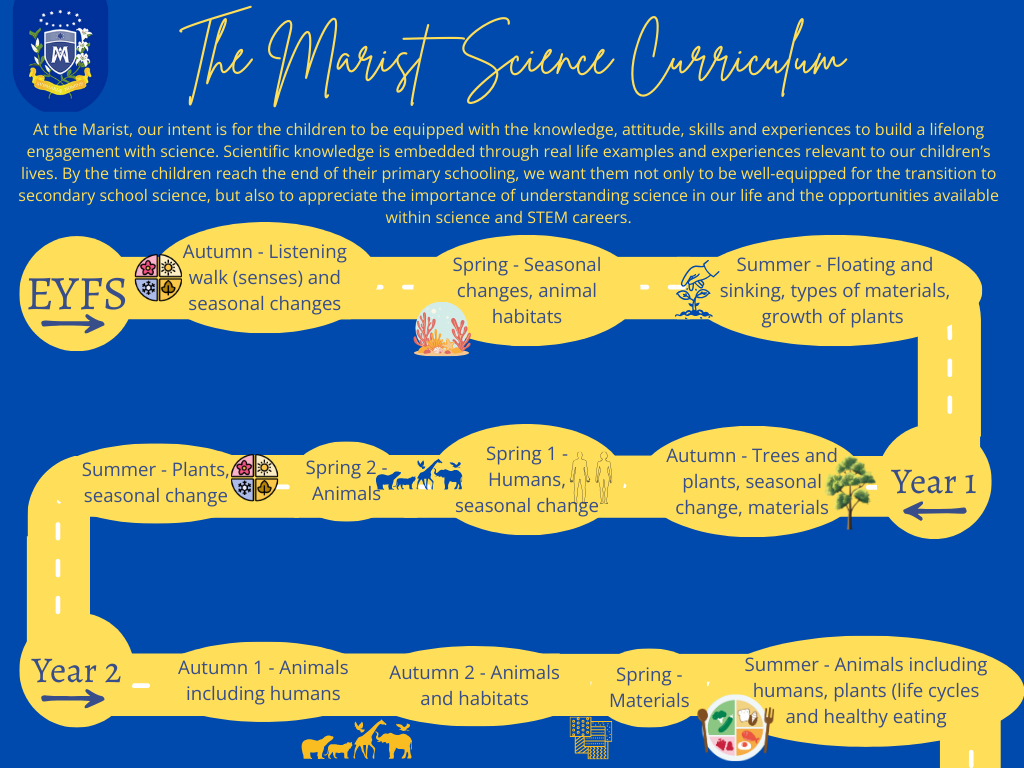
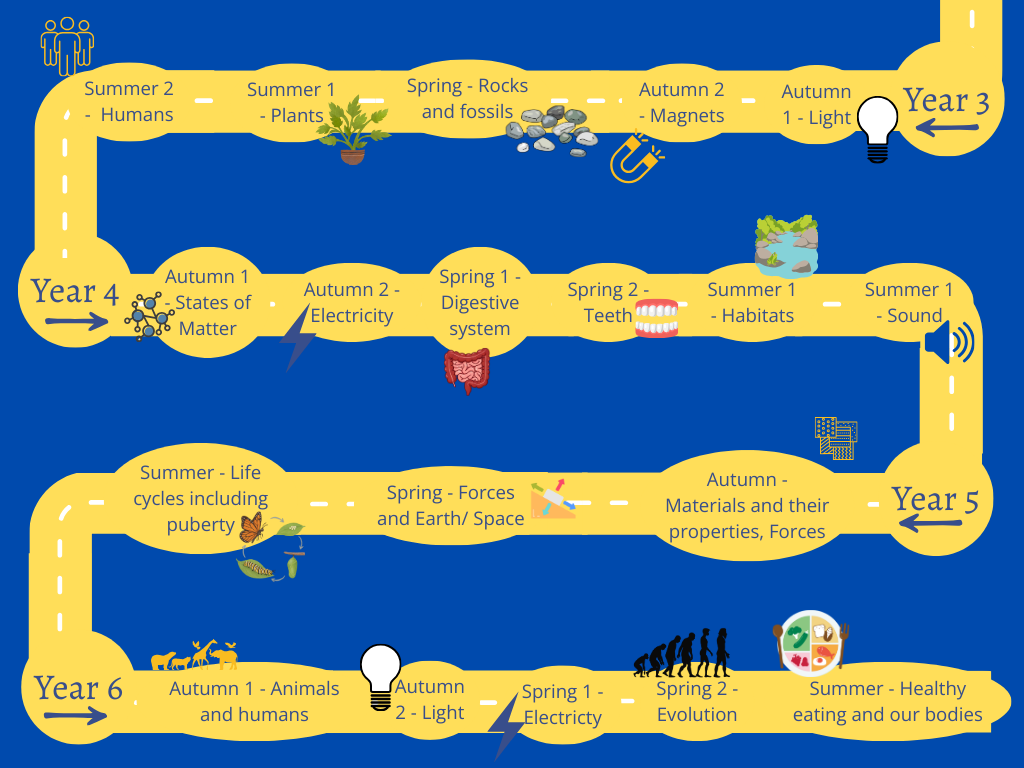
At The Marist, our intent is to equip children with the knowledge, skills, attitudes, and experiences that foster a lifelong engagement with science. We believe that science should be meaningful, relevant, and inspiring — rooted in real-life contexts and enriched through hands-on exploration and enquiry.
Scientific knowledge is revisited and strengthened through regular recall activities such as AFL questions at the start of each topic, ‘Flashback Four’ vocabulary recaps at the beginning of each lesson and the use of our vocabulary bullseye in each classroom. Knowledge organisers support children’s understanding by clearly outlining key vocabulary and scientific processes, helping them build a secure foundation for future learning.
Our curriculum includes enquiry-driven lessons, encouraging children to ask their own questions and find answers through research, investigation, and discussion. As they progress through the school, children develop their scientific working skills, culminating in self-planned enquiries by Year 6. Opportunities to report back finding through models, presentations, and peer sharing help embed learning and build confidence in using scientific vocabulary.
We celebrate science through events throughout the year such as our annual KS2 Science Fair and STEAM Week, where children meet real scientists, explore STEM careers, and engage in practical challenges. Visits and visitors — Surrey Wildlife Trust for Year 2, and a river habitat study for Year 4 — bring science to life and connect learning to the world beyond the classroom.
Our outdoor spaces, including a pond, bug hotel, garden area, a class tree for each KS1 class and planters. These provide rich opportunities to observe seasonal change, life cycles, and habitats. EYFS and Year 5 children observe caterpillars as part of their life cycle studies, deepening their understanding through direct experience.
By the end of their primary journey, our children will not only be well-prepared for secondary science but will also appreciate the role of science in society and their own lives — from healthy living to climate change. They will understand that science is a dynamic, evolving field to which they can contribute, and will be equipped to evaluate the science that shapes their world.