Geography
Geography: Our Intent, Approach and Implementation
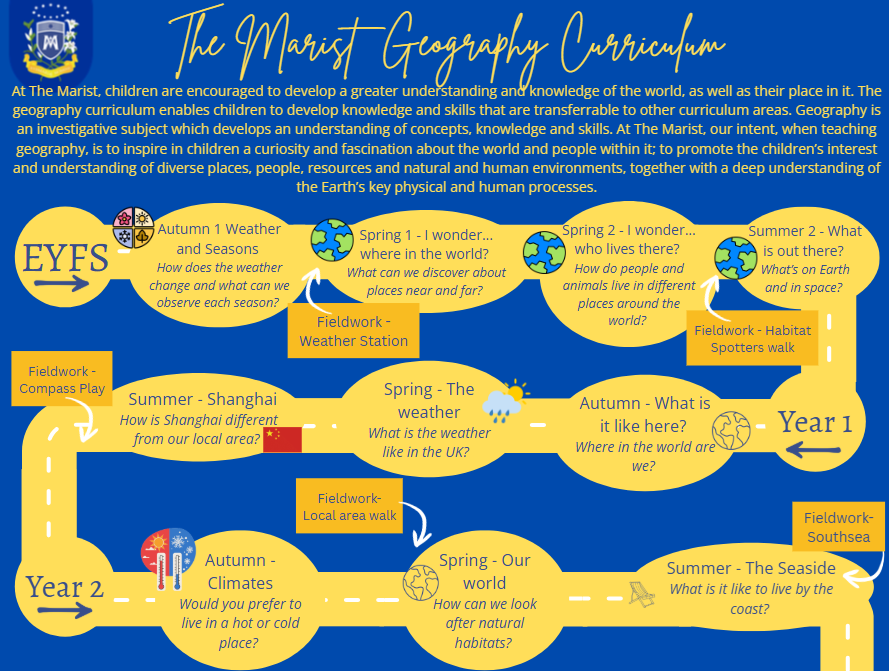
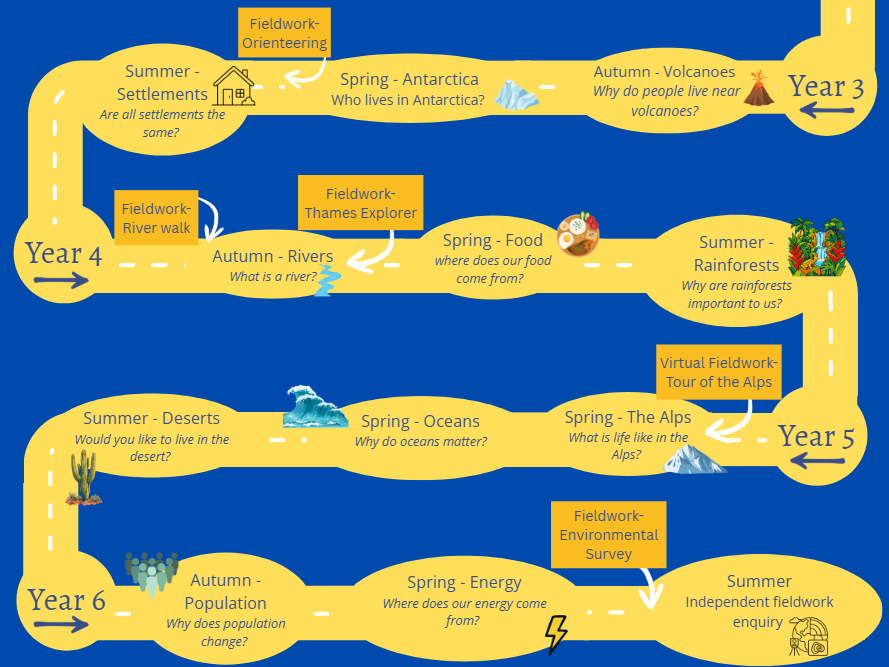
At The Marist Catholic Primary School, our Geography curriculum is designed to inspire curiosity and wonder about the world, encouraging pupils to become thoughtful, inquisitive and informed geographers. Through our carefully sequenced Kapow Primary Geography curriculum, children develop a secure understanding of places, environments and the people who live within them, enabling them to make sense of the world around them and their place within it.
Through engaging enquiries and meaningful investigations, pupils are encouraged to ask questions, explore different perspectives and develop an appreciation of the connections between people, places and the environment at both a local and global scale. Our curriculum helps children understand how Geography shapes lives, communities and landscapes over time, fostering a sense of responsibility towards the world around them.
Pupils build geographical knowledge and skills progressively throughout their time at The Marist. They learn to observe, measure, collect and interpret information, using a range of fieldwork and map-reading techniques to investigate the world around them. Through developing these skills, children learn to think critically about geographical issues, analyse evidence and communicate their findings with increasing confidence.
Geography at The Marist is enriched by meaningful experiences beyond the classroom. Pupils benefit from visits to local geographical sites and opportunities to engage with their local environment, helping them to apply their learning in real-world contexts. Fieldwork within the local area, including studies of West Byfleet, Wisley Gardens and the Wey Navigation, allows pupils to develop practical geographical skills while deepening their understanding of both human and physical geography.
As geographers, children are encouraged to recognise the impact they can have on the world around them and to understand how people and environments influence one another. Through their learning, pupils develop respect for the diversity of our world and are empowered to become active, informed citizens who can contribute positively to their communities and the wider environment.