Writing
Writing Intent
All children are provided with many opportunities to; develop and apply their writing; to plan, revise and evaluate their writing, focusing on developing on both transcription and composition. They will also develop an awareness of the audience, purpose and context, and an increasingly wide knowledge of vocabulary and grammar. We aim for all pupils to leave school being able to use fluent, legible and speedy handwriting.
Writing Implementation
Writing:
At the Marist, writing begins from a very early age - as soon as a child can mark make. Gross and fine motor skills are developed through our provision within EYFS, ensuring all children developmentally prepared to form letters correctly (taught in Read Write Inc).
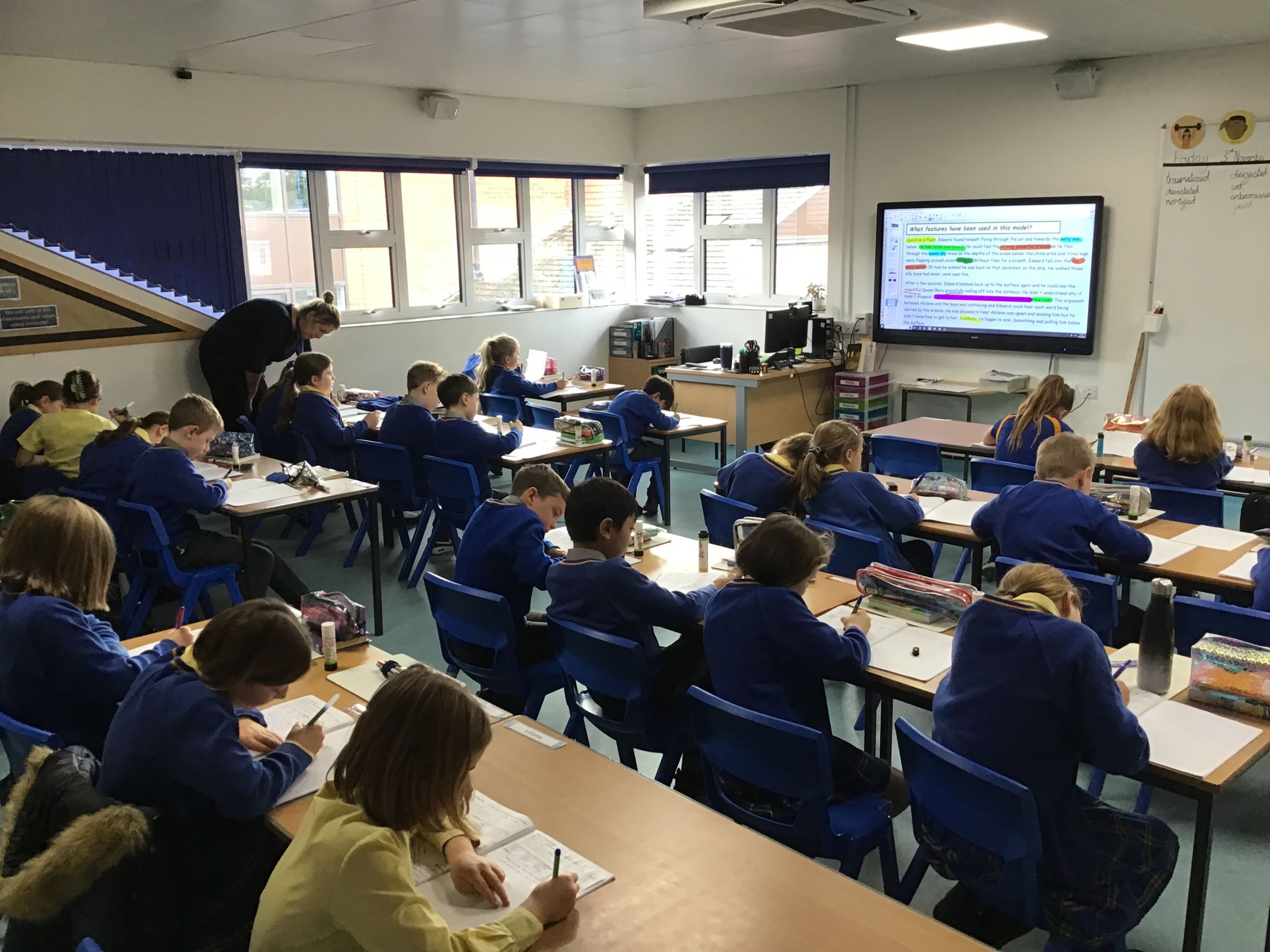
In Key Stage 1, children are taught the skills of writing primarily through oral storytelling and discussion. This supports them to structure the text and independently write in the chosen genre. In Key Stage 2, children write in various genres for a range of purposes. They analyse the model text and unpick the grammatical features and organisation, in order to apply these in their own writing.
Throughout all year groups, we teach writing through engaging and challenging topic-based texts. This supports them in the application of vocabulary and structure. Children are given termly enrichment opportunities to promote and inspire writing of a high quality across the curriculum.
Teachers initially model and scaffold the learning before giving the children the opportunity to practise the skills needed for them to write independently. Intentional monitoring is used throughout the lessons to provide the children with timely and constructive feedback, having immediate impact on their writing progression. The use of Alan Peat sentence types helps to develop the structural and technical knowledge of language and provides a framework for progression to more discerning use of different sentence constructs.
Big Write
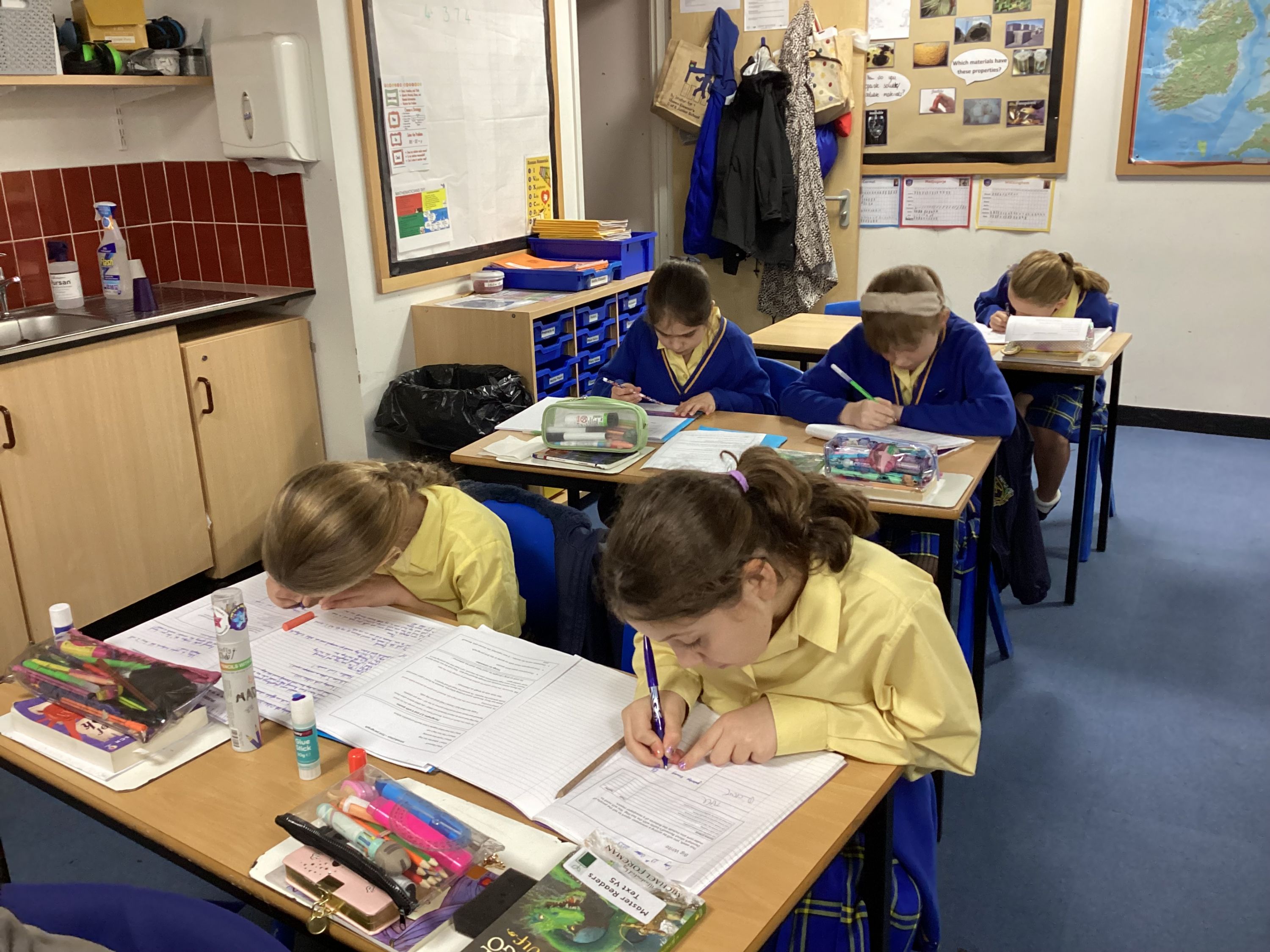
At the Marist we follow the Big Write approach to writing. This approach focuses on the importance of talk and oral rehearsal prior to writing. Children are given a real purpose for writing and there are high expectations of all pupils. In the lead up to the writing lessons, time is spent on teaching accurate basic skills in spelling, punctuation, grammar and writing. During and after each Big Write session, the children are given regular and meaningful feedback and targets are reset.
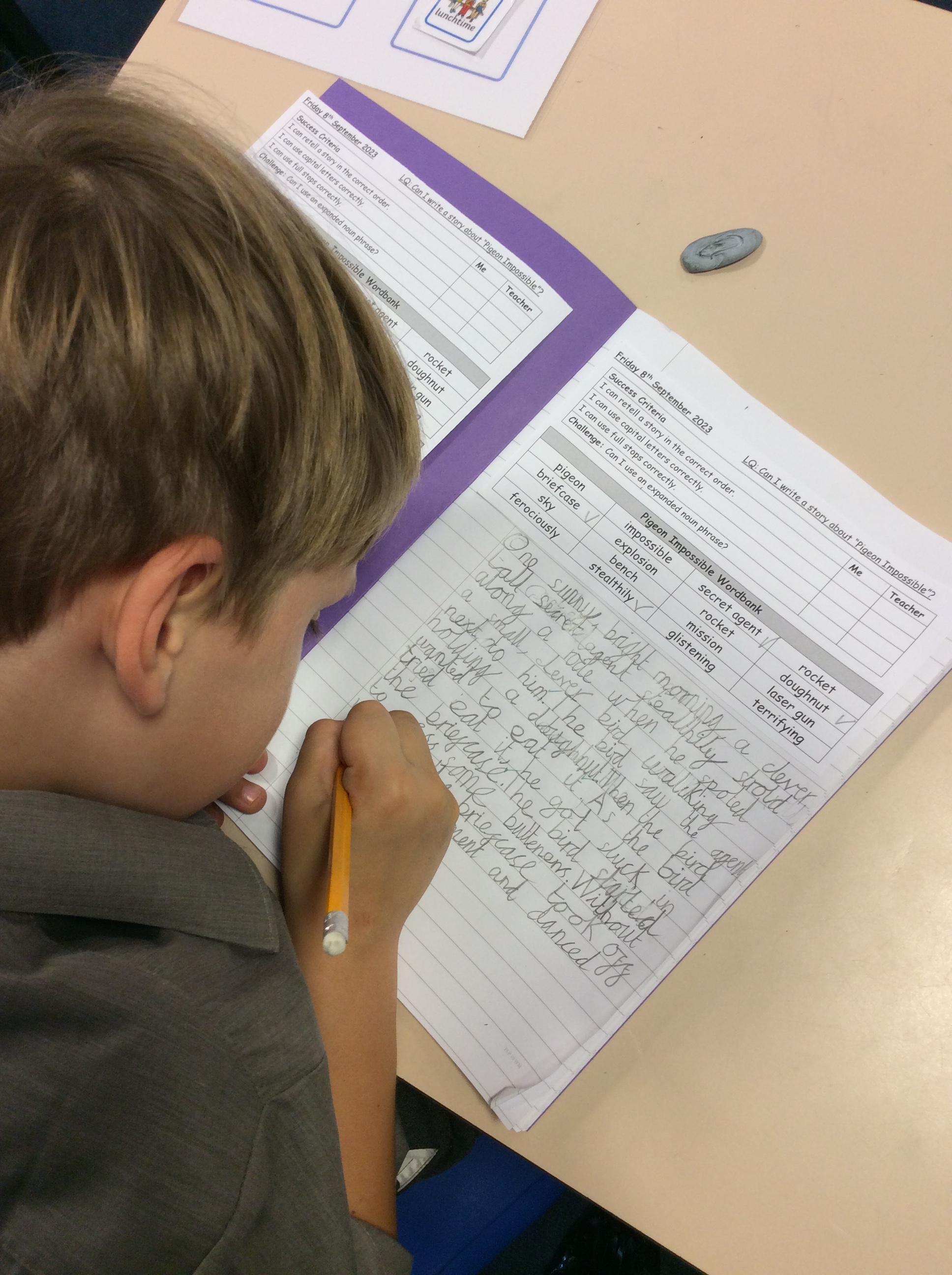
The stimulus for writing can be a photo, a picture, a video clip, or an experience and is generally linked to the high-quality text being studied in class. Lessons during the week lead up to the Friday Big Write. Time is allocated after the Big Write for editing and responding to feedback. Certain pieces are selected to be published (written up in best).
We have created a presentation for parents to give more information about the Big Write.
Spelling:
Learning how to spell is a useful, lifelong skill. Correct spelling makes a child's work easier to read and understand. If children are confident in their ability to spell, they are also more likely to use more ambitious vocabulary in their writing. Once the children have completed the Read, Write Inc. phonics programme, they then move onto the Read, Write Inc. spelling programme to teach spelling from Years 2-6. This is an interactive and engaging programme, which teaches children the rules and patterns of spelling; there is also a focus on irregular spelling patterns which need to be memorised. A spelling unit, which focuses on a single spelling rule, is covered in five sessions, across a to week period. In that time, they will be carefully taught the rule, practice using it through a range of activities and then do a short spelling check to ensure they have mastered it.
Year 3 and 4 Common Exception Words
Year 5 and 6 Common Exception Words
Handwriting:
Children in EYFS practise letter formation as part of their daily phonics. This is carried through to Year 1 where children receive timetabled handwriting sessions. In year 2, children will learn to join their handwriting. In Key Stage 2, children continue to work on joining, legibility and writing at length, receiving a pen licence when they can fluently write in a neat, cursive style through the curriculum. By the time children get to year 5, all children are expected to be writing in pen. Opportunities are given to showcase best handwriting when children ‘publish’ their work and present it for display.
Impact
The impact of our English Curriculum can be seen in the pupils’ ability to speak, discuss, read and write confidently and effectively. It can be seen in the writing the children produce and in our reading and writing results across the school and across each subject level.