Art & Design
Our Approach to Arts and Culture
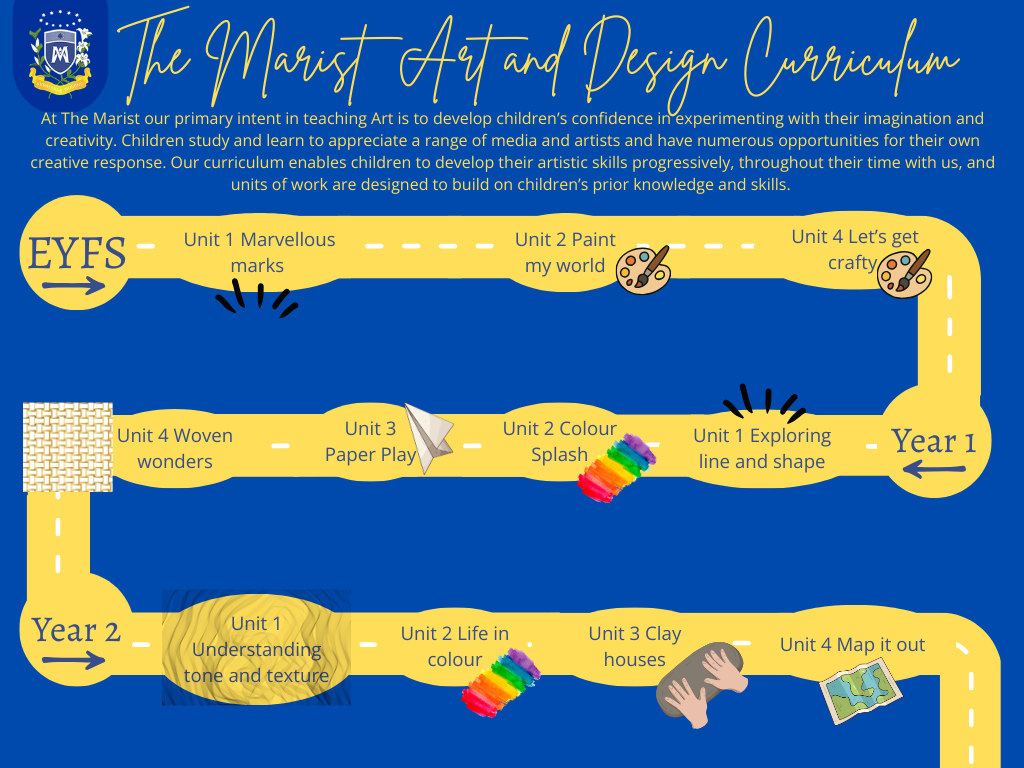
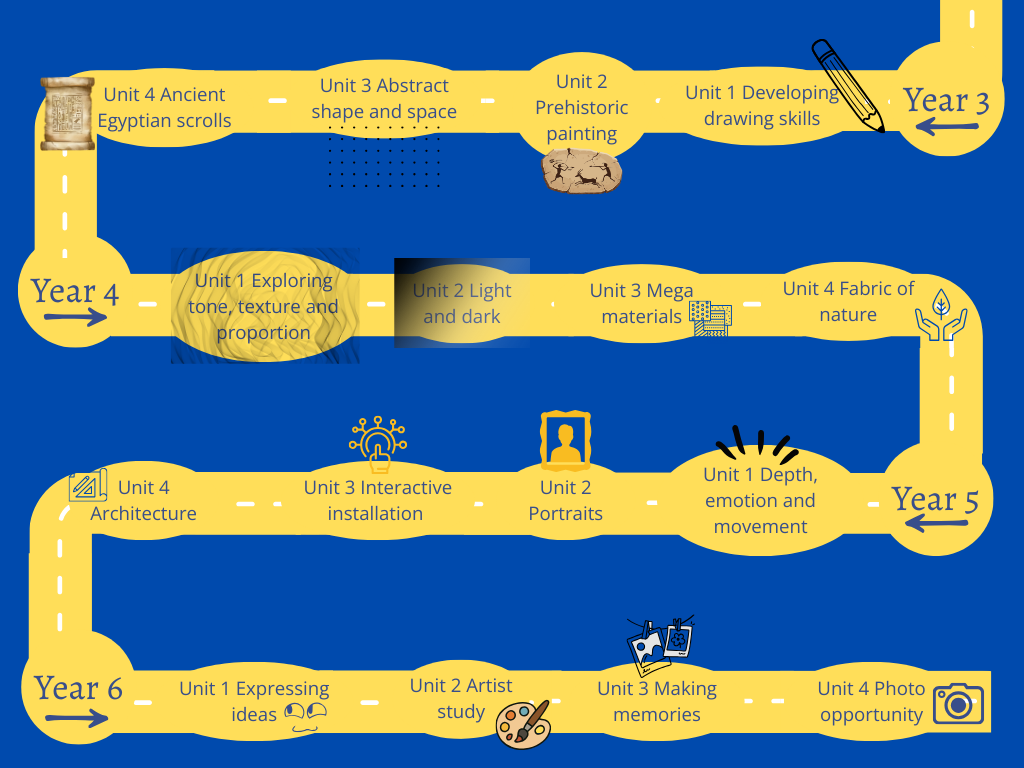
At The Marist Catholic Primary School, our Art and Design curriculum is designed to nurture creativity, imagination and self-expression, encouraging pupils to become confident and reflective artists. Through our carefully sequenced Kapow Primary Art and Design curriculum, children develop the knowledge, skills and understanding needed to create, appreciate and respond to art in meaningful ways.
Our curriculum inspires pupils to think creatively, take risks and communicate their ideas through a range of artistic media. Through studying a diverse range of artists, craftspeople and designers from different cultures, periods and traditions, children develop an understanding of how art reflects human experiences, beliefs and identities. They learn to appreciate the impact art has on individuals, communities and the wider world.
Pupils build their artistic knowledge and skills progressively throughout their time at The Marist. They develop proficiency in drawing, painting, sculpture and other art forms while exploring the formal elements of art, including colour, line, texture, shape, pattern and tone. Through regular opportunities to generate ideas, experiment with materials and refine techniques, children develop confidence in their creative abilities and learn to express themselves with increasing independence and originality.
Central to our curriculum is the use of sketchbooks as places for exploration, experimentation and reflection. Children are encouraged to record observations, develop ideas, evaluate their work and refine their artistic choices. Through discussing and analysing their own work and that of others, pupils develop the vocabulary and critical thinking skills needed to engage thoughtfully with art.
Art and Design at The Marist is enriched through links with the wider curriculum and opportunities to explore art within its social, cultural and historical contexts. Children learn how artists and designers have shaped the world around us and how creativity continues to influence everyday life. Their understanding of diverse artistic traditions helps them develop respect for different perspectives and cultures.
As artists, children are encouraged to be curious, resilient and ambitious. Through creating, evaluating and responding to art, they develop visual literacy, creative confidence and an appreciation of artistic expression that will inspire them long beyond their primary school years.
Art and Design Vocabulary Progression